
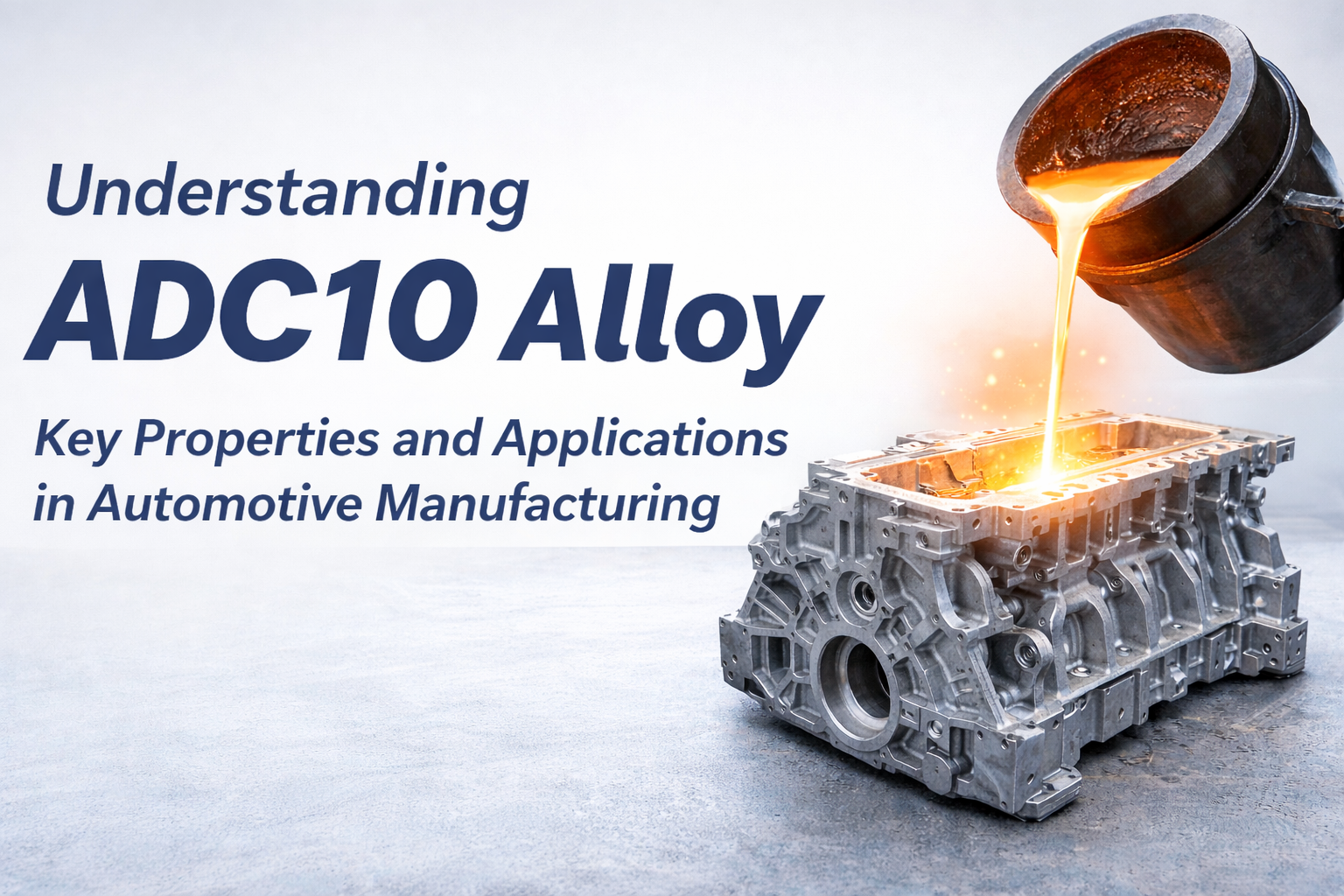
Introduction to ADC10 Alloy
ADC10 is a high-performance aluminum alloy widely utilized in the automotive manufacturing industry for various precision and complex parts. This alloy is primarily used in die casting, owing to its high castability, excellent corrosion resistance, and durability. Its combination of lightweight and thermal conductivity makes it ideal for automotive applications where high performance is crucial.
In this post, we’ll dive deeper into ADC10 alloy’s key properties, how it plays a role in manufacturing automotive components, and why it’s becoming a go-to material for automotive engineers.
What is ADC10 Alloy?
ADC10 is an aluminum-silicon alloy, specifically formulated for die casting in high-performance sectors like automotive and aerospace industries. This alloy contains a higher proportion of silicon, which enhances fluidity, castability, and corrosion resistance. Aluminum alloys are known for their excellent mechanical properties, and ADC10 is a prime example of these advantages.
Key characteristics of ADC10 include:
High strength-to-weight ratio
Superior corrosion resistance
Low density
Excellent thermal conductivity
These properties make it a material of choice for manufacturing critical automotive components that require durability, precision, and the ability to withstand harsh conditions.
Key Properties of ADC10 Alloy
1. High Castability
ADC10 alloy excels in casting because it has excellent fluidity and low viscosity when molten. This allows the alloy to precisely fill complex and intricate molds, making it ideal for producing complex automotive components such as engine blocks, transmission housings, and chassis components.
2. Corrosion Resistance
Due to its higher silicon content, ADC10 is extremely resistant to corrosion. Automotive parts, such as brake calipers, engine blocks, and transmission cases, are exposed to moisture, chemicals, and salts. ADC10 alloy’s corrosion resistance ensures that these components last longer, even in challenging environments.
For more on automotive corrosion resistance, you can check this article on materials science that discusses alloy choices and their protection mechanisms.
3. Strength and Durability
With high tensile strength, ADC10 can endure extreme pressures and high temperatures found in engine parts and other critical components. Its durability makes it a solid choice for parts exposed to mechanical stress in modern vehicles, ensuring they maintain integrity and performance.
4. Lightweight and Thermal Conductivity
ADC10’s low density is essential in reducing the overall weight of vehicle components, thus enhancing fuel efficiency. Additionally, it has excellent thermal conductivity, making it perfect for engine components that need to dissipate heat efficiently.
5. Machinability
The alloy is easy to machine, which allows manufacturers to produce precise parts with tight tolerances. This is particularly important for automotive applications, where component dimensions need to meet strict specifications.
Applications of ADC10 Alloy in Automotive Manufacturing
1. Engine Components
Due to its heat resistance and strength-to-weight ratio, ADC10 is commonly used in manufacturing engine blocks, cylinder heads, and other critical engine components. These parts are exposed to high temperatures, mechanical stress, and require durable, lightweight material to operate efficiently.
Check out this research paper on aluminum alloys in engine manufacturing for more details on the materials used in automotive engines.
2. Transmission Cases and Housings
The alloy’s casting properties make it ideal for manufacturing transmission cases, housings, and gearboxes, which need to endure mechanical stresses and high temperature variations. ADC10’s ability to resist wear and provide strength under pressure makes it an excellent choice for these components.
3. Brake Parts
ADC10’s corrosion resistance is a key feature that makes it well-suited for automotive brake parts, including brake calipers. These parts are exposed to high friction and environmental factors, so using a durable, corrosion-resistant alloy ensures reliability and longevity.
For more on ADC10’s role in brake components, you can refer to this technical guide on brake materials.
4. Structural and Chassis Parts
ADC10 is also used for the production of structural parts like brackets, frames, and supports, where weight reduction is crucial. By using this material, manufacturers can ensure that the structural integrity is maintained while reducing the overall weight of the vehicle, leading to better fuel efficiency.
5. Heat Exchangers and Radiators
With excellent thermal conductivity, ADC10 is a top choice for heat exchangers and radiators. Automotive components that require heat dissipation, such as radiators, use ADC10 to maintain an optimal temperature for the engine, preventing overheating.
Check out this article on aluminum alloys for heat exchange systems here.
Benefits of ADC10 Alloy in Automotive Manufacturing
1. Enhanced Casting Quality
ADC10 ensures superior casting quality due to its fluidity and precision, essential for automotive parts that need to meet tight tolerances and stringent performance requirements.
2. Durability and Longevity
The alloy’s resistance to corrosion and high tensile strength ensures that automotive components last longer, improving vehicle reliability and reducing maintenance costs.
3. Lightweight for Fuel Efficiency
By reducing the weight of automotive components, ADC10 helps improve fuel efficiency—a major concern for manufacturers striving for better environmental performance and lower costs.
4. Cost-Effective Manufacturing
ADC10’s excellent castability means fewer defects and less material waste, which helps reduce manufacturing costs. The ease of machining also contributes to faster production times, making it a cost-effective choice for manufacturers.
Why Choose ADC10 Over Other Aluminum Alloys?
While alloys like ADC12 and A380 are commonly used in automotive manufacturing, ADC10 stands out because of its unique combination of properties, including superior castability, corrosion resistance, and mechanical strength. These advantages make ADC10 the material of choice for automotive applications where performance and precision are paramount.
Conclusion
ADC10 alloy’s combination of strength, durability, and castability makes it an indispensable material in automotive manufacturing. Its versatility allows it to be used in a wide range of applications, from engine components to heat exchangers, all while contributing to better performance and fuel efficiency. As the demand for lightweight, high-performance automotive components continues to grow, ADC10 alloy will remain a key player in the future of automotive manufacturing.
For more information about aluminum alloys in automotive applications, visit The Aluminum Association.